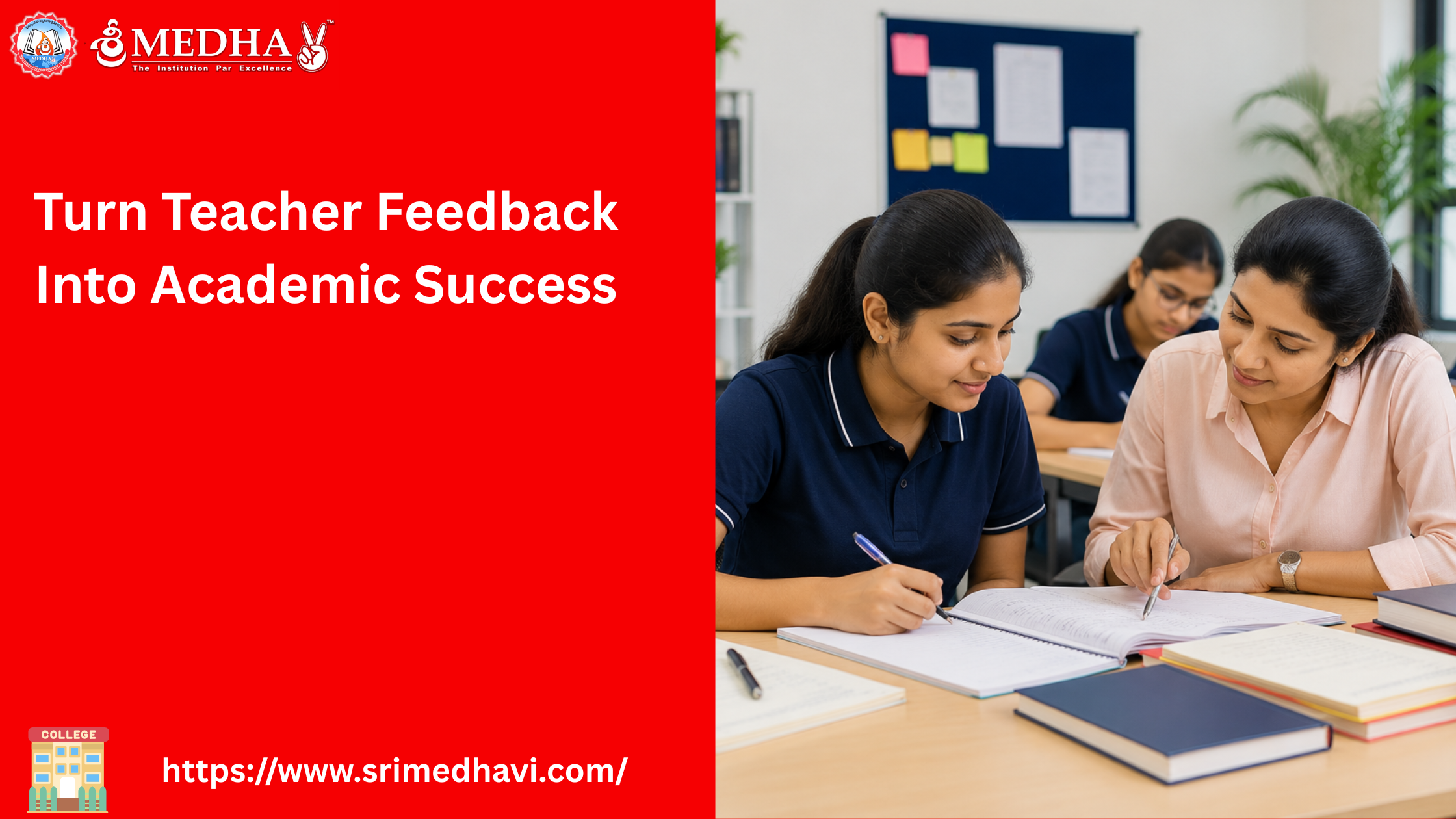
For many intermediate students, academic feedback can feel like criticism. A teacher may point out mistakes in an answer, suggest a different study method, or explain why a student is not performing as expected. However, students who learn to view feedback as an opportunity for improvement often make faster and more meaningful academic progress.
In fact, one of the qualities that distinguishes the Best Junior Colleges in Hyderabad is the importance they place on continuous feedback and student improvement. Academic success is not simply about attending classes and writing examinations. It is also about understanding mistakes, identifying weaknesses, and making the right changes at the right time.
The Best Junior Colleges in Hyderabad understand that every student learns differently. Some students may need help with conceptual understanding, while others may struggle with time management, revision, or examination techniques. Regular teacher feedback can help identify these areas and guide students toward better performance.
For students studying in intermediate, learning how to receive and use feedback effectively can become an important skill that benefits them not only in board examinations but also in competitive examinations and higher education.
What Is Academic Feedback?
Academic feedback is information provided by teachers about a student’s learning, performance, strengths, and areas that need improvement. It may be given after a classroom discussion, assignment, unit test, weekly examination, or board examination.
Feedback can take different forms. A teacher may tell a student that a particular concept needs more practice. They may identify repeated mistakes in mathematics, explain how to structure a better answer in a theory subject, or recommend a different approach to solving a problem.
The Best Junior Colleges in Hyderabad use feedback as an ongoing process rather than something that happens only after major examinations. When students receive regular guidance, they can identify problems before they become bigger academic challenges.
This approach is especially valuable for intermediate students who are preparing for board examinations alongside competitive examinations such as JEE, NEET, or other entrance tests.
Why Teacher Feedback Matters for Intermediate Students
Intermediate education is an important stage in a student’s academic journey. The subjects become more advanced, the syllabus becomes more demanding, and students are expected to manage greater academic responsibility.
The Best Junior Colleges in Hyderabad recognize that students cannot improve simply by studying for longer hours. They need to know whether their study methods are actually working.
Teacher feedback can help students understand:
- Which subjects require additional attention
- Which concepts are not yet clear
- Why marks are being lost in examinations
- Whether answers are being presented correctly
- How effectively time is being managed
- Which mistakes are repeated regularly
- Whether preparation is aligned with examination requirements
Students who actively use this information can gradually improve their academic performance.
1. Listen to Feedback Without Taking It Personally
One of the first steps toward academic improvement is learning to accept feedback positively.
When a teacher says that a student has made mistakes, it does not mean the student is incapable of succeeding. Instead, it means there is an opportunity to identify the problem and correct it.
Students in the Best Junior Colleges in Hyderabad should develop the mindset that feedback is information, not judgment.
For example, instead of thinking, “My teacher says I am weak in mathematics,” a student can think, “My teacher has identified mathematics as an area where I need more practice.”
This small change in thinking can make a significant difference.
2. Ask Specific Questions
Students should not hesitate to ask teachers for clarification.
Instead of simply saying, “I don’t understand this subject,” students can ask specific questions such as:
- Which topic should I revise first?
- Why did I lose marks in this answer?
- How can I improve my problem-solving speed?
- Am I making calculation mistakes or conceptual mistakes?
- How should I prepare for the next test?
The Best Junior Colleges in Hyderabad encourage students to interact with faculty and clarify their doubts. This type of communication helps teachers understand the exact difficulties students are facing.
When students ask better questions, they often receive more useful answers.
3. Convert Feedback into an Action Plan
Receiving feedback is only the first step. Students must convert that feedback into action.
Suppose a teacher tells a student that they are making frequent mistakes in physics numericals. Simply acknowledging the feedback will not improve performance.
The student can create a simple action plan:
Problem: Mistakes in physics numericals
Possible reason: Weak understanding of formulas
Action: Revise formulas every morning
Practice: Solve 10 problems daily
Review: Discuss difficult questions with the teacher
Target: Reduce mistakes in the next test
This process turns general feedback into measurable improvement.
Students attending the Best Junior Colleges in Hyderabad can benefit greatly from developing this habit because it encourages them to take responsibility for their academic progress.
4. Maintain a Feedback Notebook
A simple feedback notebook can become a powerful academic tool.
After every test or important discussion with a teacher, students can write down:
- Mistakes they made
- Topics they need to revise
- Suggestions given by teachers
- Questions they need to ask later
- Improvements they want to make
- Targets for the next examination
Over time, this notebook becomes a personal record of academic growth.
The Best Junior Colleges in Hyderabad focus on helping students become more organized and disciplined. Maintaining a feedback record is one practical way students can develop these qualities.
5. Look for Patterns in Your Mistakes
One of the most valuable aspects of teacher feedback is that it can reveal repeated patterns.
A student may think that losing five marks in every test is due to different reasons. However, teacher feedback may reveal that the same issue keeps appearing.
For example:
- Not reading questions carefully
- Making calculation errors
- Forgetting important formulas
- Writing incomplete answers
- Spending too much time on one question
- Not revising regularly
The Best Junior Colleges in Hyderabad encourage students to look beyond individual test scores and understand the reasons behind their performance.
Once a repeated mistake is identified, students can focus on fixing the root cause rather than simply trying to score higher in the next test.
6. Use Feedback to Improve Study Techniques
Not every student benefits from the same study method.
Some students may learn better through visual explanations, while others may benefit from solving practice questions or discussing concepts with teachers.
If a teacher notices that a student understands concepts during class but performs poorly in examinations, the issue may not be intelligence. It could be a problem with revision, time management, or examination anxiety.
Students can use teacher feedback to adjust their study strategies.
The Best Junior Colleges in Hyderabad often combine classroom teaching, assessments, revision, and academic guidance to help students identify the methods that work best for them.
Students can also explore reliable educational resources from Khan Academy for additional practice and concept reinforcement.
7. Review Your Progress Regularly
Improvement should be measured over time.
Students should not expect immediate results after receiving feedback. Instead, they should review their progress after several tests or weeks of consistent practice.
For example, a student who was previously making five mistakes in mathematics may reduce that number to three and eventually one. That is progress.
The Best Junior Colleges in Hyderabad understand that academic improvement is a continuous journey. Regular assessments help students and teachers determine whether the strategies being followed are actually producing results.
Students can also refer to NCERT for official educational resources and textbooks that can support conceptual learning.
8. Learn to Accept Both Positive and Negative Feedback
Feedback is not always about mistakes.
Teachers may also identify a student’s strengths. A student may be excellent at solving numerical problems but need to improve written presentation. Another student may have strong conceptual knowledge but struggle with speed.
The Best Junior Colleges in Hyderabad help students understand both their strengths and weaknesses.
Positive feedback can build confidence, while constructive feedback can identify areas for growth. Students need both.
The goal is not to become perfect immediately. The goal is to become better with every test, assignment, and learning experience.
9. Communicate with Teachers Consistently
Academic improvement becomes easier when students maintain regular communication with their teachers.
Students should not wait until final examinations to ask for help. If they notice a problem, they should discuss it early.
The Best Junior Colleges in Hyderabad recognize that strong teacher-student communication can create a more supportive academic environment.
Regular communication allows teachers to understand student difficulties and provide timely guidance. It also helps students become more confident about asking questions and seeking support.
For more information about Sri Medhavi Junior College and its academic approach, students and parents can visit the Sri Medhavi Junior College website.
10. Parents Can Support the Feedback Process
Parents also have an important role in helping students use feedback effectively.
Instead of asking only, “How many marks did you get?” parents can ask:
- What did your teacher suggest?
- Which topic do you need to improve?
- What will you do differently next time?
- Did you understand your mistakes?
This approach shifts the focus from marks alone to learning and improvement.
The Best Junior Colleges in Hyderabad understand that students perform better when teachers, parents, and students work together toward a common goal.
Parents can also explore the Sri Medhavi Junior College blog for educational information and guidance related to intermediate students.
How Feedback Helps Students Prepare for Competitive Exams
For students preparing for JEE, NEET, and other competitive examinations, feedback becomes even more important.
Competitive examinations require more than memorizing information. Students need strong conceptual understanding, speed, accuracy, problem-solving ability, and effective time management.
The Best Junior Colleges in Hyderabad understand that regular assessments can help students identify these areas.
For example, a student may score well in board examinations but struggle with application-based questions. Teacher feedback can help identify this gap early.
Similarly, a student may know the correct answer but take too much time to solve a problem. Feedback can highlight the need to improve speed and examination strategy.
By acting on this feedback consistently, students can gradually strengthen their overall preparation.
Turning Feedback into a Growth Mindset
The most successful students are not necessarily those who never make mistakes. They are often the students who learn from mistakes faster.
A growth mindset means believing that abilities can improve through effort, practice, guidance, and persistence.
The Best Junior Colleges in Hyderabad can play an important role in developing this mindset by creating an environment where students are encouraged to learn from mistakes rather than fear them.
When students see feedback as a roadmap for improvement, academic challenges become easier to manage.
Instead of asking, “Why did I get low marks?” students begin asking, “What can I do differently next time?”
That change in thinking can influence their entire academic journey.
Conclusion
Teacher feedback is one of the most valuable tools available to intermediate students. However, its real value depends on how students use it.
Students who listen carefully, ask questions, identify patterns, create action plans, track progress, and consistently apply suggestions can turn feedback into measurable academic improvement.
The Best Junior Colleges in Hyderabad understand that education is not only about completing a syllabus or achieving high marks. It is about helping students understand their strengths, overcome weaknesses, develop confidence, and become independent learners.
For students, every piece of feedback can be viewed as an opportunity. A mistake can reveal a gap in understanding. A suggestion can introduce a better study method. A low score can highlight an area that needs attention. With the right mindset, each of these experiences can contribute to long-term growth.
Ultimately, students who learn how to receive and apply feedback are better prepared not only for intermediate examinations but also for competitive exams, higher education, and future careers. Choosing an institution that values continuous assessment, teacher guidance, and student development can make this journey more productive.
If you are looking for an institution that supports students through structured learning, academic guidance, regular assessments, and a student-focused approach, exploring the Best Junior Colleges in Hyderabad can be an important step toward making the right educational decision.
Ready to Take the Next Step?
Looking for a supportive academic environment for your child’s intermediate education? Explore Sri Medhavi Junior College and discover how the right combination of teaching, assessment, feedback, and guidance can help students move closer to their academic goals.
Visit Sri Medhavi Junior College today to learn more about admissions, academic programs, and opportunities for intermediate students.